The first drops hit the window and you're halfway out the door. Umbrella or raincoat? Most of us grab whatever is hanging closest, then spend the walk regretting it. The honest answer is that neither one wins outright. An umbrella is a portable roof; a raincoat is portable shelter. They fail in different weather, suit different trips, and feel completely different after twenty minutes. Here's the practical version of the comparison: what each one covers, where each one lets you down, and how to choose in about five seconds.
Coverage: A Roof Versus a Shell
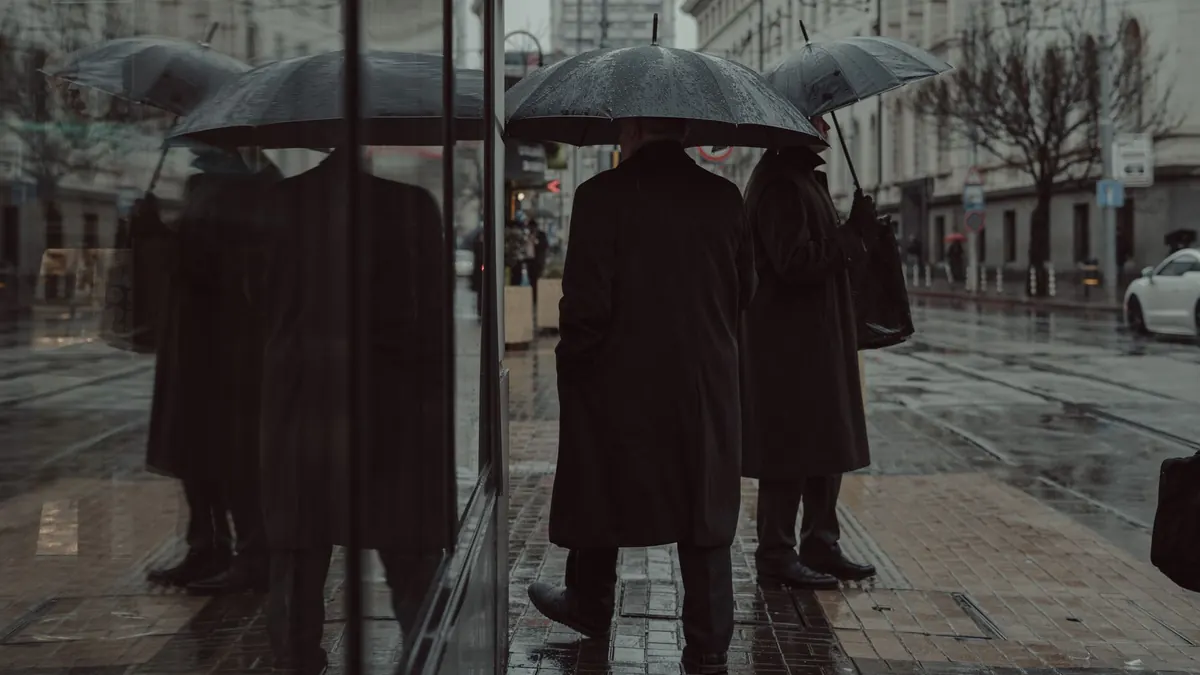
An umbrella works from above. It keeps rain off your head, shoulders, chest and whatever bag you're carrying, and it does it without touching your skin. That gap matters. You stay cooler, your glasses stay clear, and your face never gets wet. The trade-off is everything below the canopy: splashes off the pavement, water thrown up by passing cars, and rain driven sideways by wind. Walk twenty minutes through a heavy shower and an umbrella will keep your top dry while your jeans soak from the knee down.
A raincoat works from the outside in. A long coat with taped seams and a proper hood covers more of your body than any umbrella, including your back and arms, which is exactly where wind-blown rain lands. But it puts fabric right against you. Hoods narrow your peripheral vision, muffle sound and funnel drips onto your collar the moment you look up. If the hood doesn't cinch, rain runs down your neck, and that feels worse than simply being wet.
One more thing neither solves: the transition. A closed umbrella drips across the bus floor and into the shop doorway. A wet coat has to be worn or carried, and it will soak whatever it touches.
Wind Is the Deciding Factor
In steady, vertical rain with no breeze, an umbrella is the more comfortable choice by a wide margin. Add wind and the balance tips fast. A gusty day turns an umbrella into a sail that tugs at your wrist, folds backwards, and forces you to tilt and fight it. Each tilt exposes something: angle it forward and your back gets soaked, angle it back and your legs take the hit.
A well-fitted raincoat simply doesn't care. Cinch the hood, tighten the cuffs, and you can lean into the weather with both hands free. If you live somewhere with real storms rather than polite drizzle, this single factor should probably settle the question for you.
Hands, Doors and Crowded Trains: The Convenience Test
Convenience is where umbrellas quietly lose ground, because rain rarely arrives when you're standing still with a free hand.
- Umbrellas are better for: popping out for lunch, sharing with a companion under one canopy, doubling as a sunshade in summer, and drying open in a hallway so they're ready tomorrow.
- Umbrellas are worse for: carrying shopping, holding a coffee, pushing a stroller, walking a dog on a lead, answering your phone, and getting through turnstiles. They also get left behind on trains more than any other item of rain gear.
- Raincoats are better for: anything hands-free — cycling, hiking, stairs, crowded platforms, festivals, and children who refuse to hold anything for longer than a minute.
- Raincoats are worse for: the moment the rain stops. Then you're carrying a bulky, damp shell in your bag or wearing it as a personal sauna.
Breathability: The Part You Notice Later
This is where cheap raincoats lose the argument. A waterproof layer that doesn't breathe traps your own heat and moisture inside. Walk a mile at a brisk pace and you'll arrive damp from sweat, which defeats the entire purpose. If you're choosing a raincoat for anything more energetic than a dash to the car, look for underarm vents, a breathable fabric, and a loose enough cut to let air move. Wear a thin wicking layer underneath rather than a heavy cotton jumper that holds water.
Umbrellas have no such problem. Your torso sits in open air, so you stay dry and comfortable in warm, muggy rain — the kind that arrives in July and makes a raincoat unbearable. In cold winter rain the calculation flips: a coat adds warmth, while an umbrella leaves you exposed to the wind chill.
Matching the Gear to the Trip
Rather than picking a side, pick per outing. A few common scenarios and the sensible answer for each:
- Short city errands: compact umbrella. Deploy it, use it, shake it out, done.
- Commuting with a bag: a small umbrella for the door-to-station dash, and a packable raincoat if the walk at the other end is long.
- Cycling: raincoat with a hood that fits under or over your helmet. Never an umbrella — one hand on the bars is not a trade worth making.
- Hiking: raincoat plus a pack cover. An umbrella can work on open, low-wind trails, but it's a liability on ridges and in trees.
- The school run: raincoats, hoods up, spare socks in the bag. Children and umbrellas are a short-lived combination.
- Standing outdoors for hours: a raincoat or poncho. Umbrellas block sightlines and are banned at many stadiums and events.
- If you wear glasses or dislike hoods: umbrella, plus a cap with a brim to catch the drips.
Two habits make either option work better. First, layer properly: a light wicking base layer under a shell keeps you far drier than a heavy coat alone. Second, maintain what you own — reproof a raincoat when water stops beading, and check umbrella ribs for bends before the season starts rather than during a downpour.
A Simple Rule to Take Away
Choose the umbrella when the rain is light to moderate, the wind is calm, the trip is short, or the air is warm and humid. Choose the raincoat when it's windy, when you'll be out for a while, when your hands are needed, or when you'll be moving fast enough to work up a sweat, in which case you want vents rather than plastic.
Most people who stay genuinely dry own both and keep them together: a compact umbrella in the bag, a packable raincoat in the car or by the door. Then the decision takes three seconds instead of twenty minutes of regret. Glance at the sky, check the wind, and grab accordingly.
Photo: Iliya Pelov / Pexels