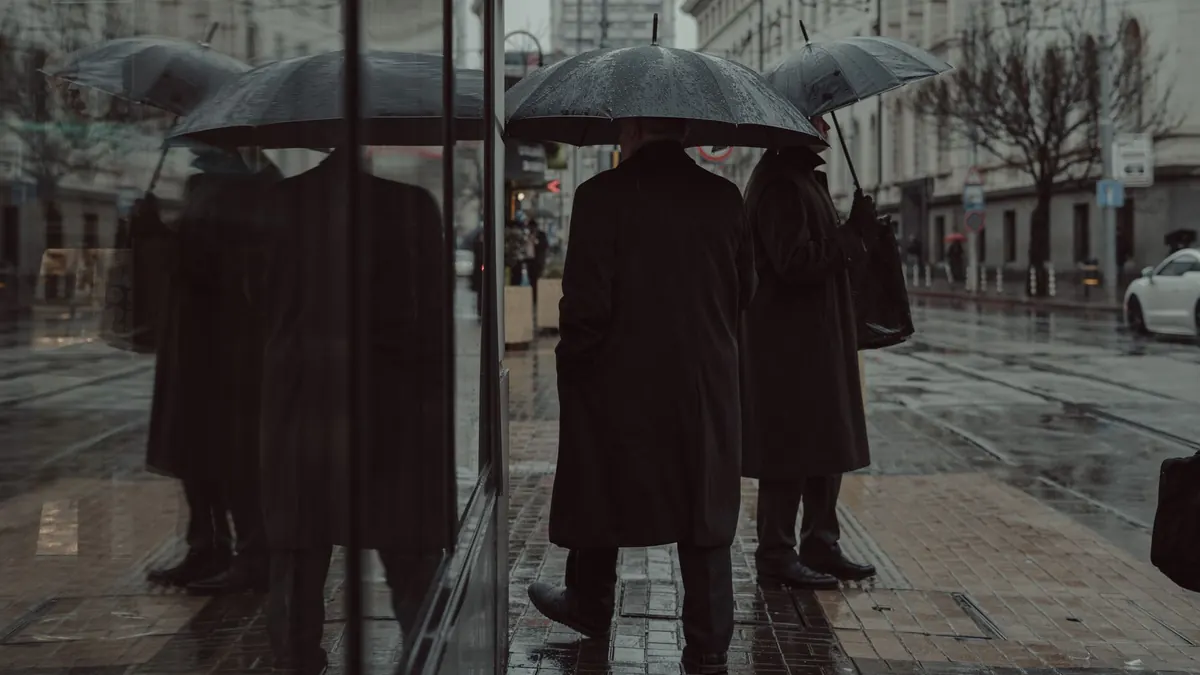
A good umbrella is the centrepiece of any rainy-day setup, and it earns its place. But watch someone walking through a proper downpour — rain driven sideways, puddles the size of dinner plates, a bus soaking the pavement as it pulls in — and you notice the canopy only solves part of the problem. Rain arrives from below, from the side, and from the wet umbrella you just folded into your bag. The accessories around your umbrella are what turn a dry head into a dry day.
What an Umbrella Can't Do
Think about where you actually get wet. Your jacket shoulders stay dry, but the bottom 20 centimetres of your trousers don't. Water sheets off the canopy and lands squarely on your shoes. Your hands get cold and damp on the handle. And then there's the aftermath: a dripping umbrella in a crowded carriage, or rolled up against the laptop in your backpack.
So the gaps are predictable. Feet, hands, bag contents, and the umbrella itself. Each one has a cheap, simple fix, and none of them require you to spend much.
Waterproof Bags and Dry Bags
Most backpacks are water-resistant, not waterproof. That distinction matters on a 30-minute walk. A durable water-repellent finish beads light rain for a while, but seams, zips and the fabric itself give way under sustained pressure, and water wicks through the back panel where it presses against your coat.
The most reliable setup is a waterproof roll-top bag. Roll the top down three or four times and clip it, and you have a closure with no zip to fail. Failing that, a rain cover stretched over your existing bag adds a decent outer layer. Cheapest of all, and my usual recommendation: put a small dry bag inside whatever you already own.
What to look for
- Roll-top closures over zips — fewer points of failure, easier to trust in heavy rain.
- Taped or welded seams, because stitched seams are where water creeps in first.
- A flap over any zip if you do choose a zipped bag, plus a water-resistant zip rather than a standard one.
- Hydrostatic head ratings printed on the label. Higher numbers mean the fabric resists more water pressure; anything marketed as fully waterproof will state one.
- A separate padded sleeve for a laptop, inside the dry area rather than against your back.
Packing matters as much as the bag. Put your phone and keys in a small pouch inside the main compartment, not the outside pocket where water pools. Keep paperwork in a flat plastic wallet. It takes ten seconds and saves an entire day.
Shoe Covers and Waterproof Footwear
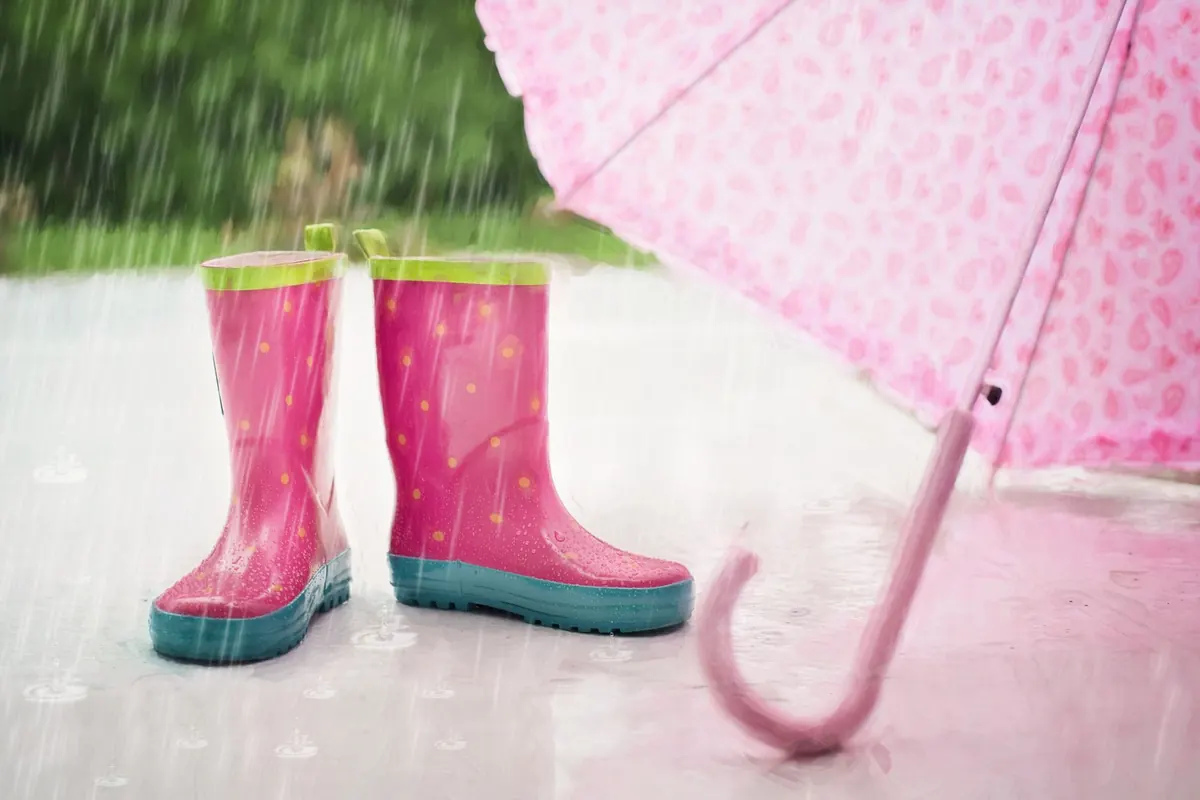
Waterproof overshoes — silicone or coated nylon shells with an elastic cuff — are the fastest fix for feet. They slip over your shoes, weigh almost nothing folded up, and are ideal when you're commuting in leather shoes or arriving somewhere you need to look presentable. Keep a pair in your bag from autumn onwards.
They have limits worth knowing. The soles wear through quickly on rough pavement, they can be slippery on polished tile indoors, and they trap sweat on a long walk. If you're covering real distance, waterproof boots or trail shoes with a membrane do the job better, especially when treated with a wax or spray now and then to keep the upper shedding water.
Socks decide how the day feels. Wool and wool-blend socks stay warm even when damp, which is why hikers swear by them. Cotton does the opposite — once wet, it stays cold and clammy against your skin.
Drying tip: stuff wet shoes with newspaper overnight and leave them at room temperature. Direct heat from a radiator or hair dryer can crack leather and loosen glue.
Rain Hats, Caps and Hoods
A rain hat with a proper brim solves several problems an umbrella can't. It keeps drips off your glasses, leaves both hands free for bags or a bike, and doesn't invert in a gust. Waxed cotton bucket hats and technical caps with taped seams both work well; pick whichever suits your coat.
If you wear glasses, brims beat hoods. A hood funnels water down your face and mists up your lenses. When you do use a hood, cinch the cords so it moves with your head rather than hanging loose, and wear a thin cap underneath to keep the fabric off your forehead.
The Small Extras That Save a Day
- A waterproof phone pouch — a few pounds, or a resealable bag in a pinch.
- Waterproof gloves or a thin pair of liners, for cold metal handrails and bike handlebars.
- A brolly bag or plastic sleeve so a wet umbrella doesn't soak your bag, your lap or the floor.
- A small microfibre cloth for glasses, phone screens and wet seats.
- Reflective details on your bag or jacket. Dark, wet evenings reduce how easily drivers see you.
- A spare foldable umbrella left at the office or in the car, so you're never caught out twice.
Build a Rain Kit That Matches Your Walk
- Walk your normal route and note where you get wet. Ankles? Bag? Hands? That's your priority list.
- Protect what's inside your bag first — a dry bag or pouch is the cheapest insurance you'll buy.
- Sort your feet next, with overshoes for short commutes or waterproof footwear for longer ones.
- Add a hat for windy days when holding an umbrella becomes a wrestling match.
- Keep the small extras in one pouch by the door so you can grab it without thinking.
Start With One Thing
You don't need all of this tomorrow. Pick the single annoyance that bothers you most — soaked socks, a damp laptop, drips down your glasses — and fix just that one. Live with it for a week in the rain and you'll notice the difference immediately.
Then add the next piece when it annoys you enough. Rain gear works best when it's built around your actual habits rather than a list, and by the end of one wet season you'll have a kit that makes an umbrella feel like the beginning of the answer rather than the whole of it.
Photo: Jill Wellington / Pexels