A good umbrella is a small piece of engineering: a shaft, a runner, eight or so ribs, and a canopy stretched tight enough to shed rain without flapping. It costs more than a sandwich and less than a raincoat, which is exactly why most of us treat it badly. We shove it in a bag, forget it behind a car seat, and then wonder why it smells like a wet cellar by March. None of the damage is mysterious. Almost every dead umbrella fails for one of seven reasons, and every one of them is easy to prevent.
Mistake 1: Folding It Away Wet
Water isn't the enemy. Trapped water is.
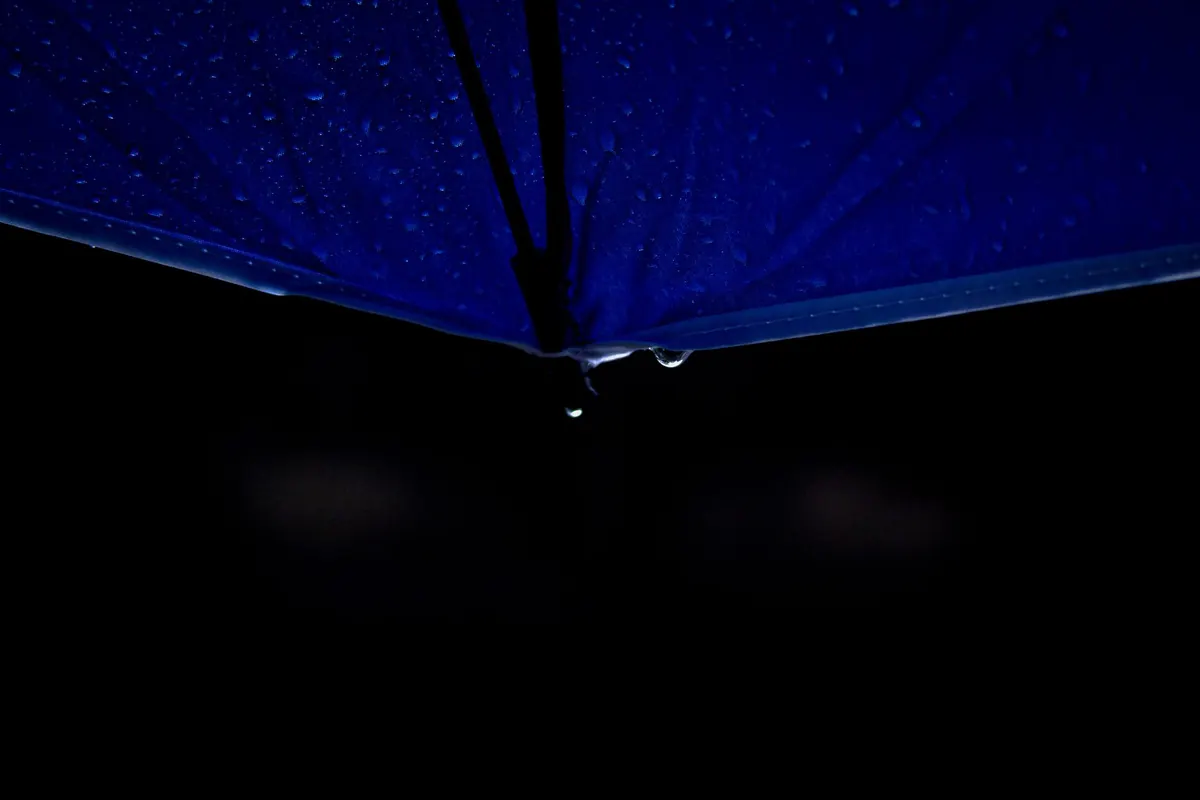
When you furl a soaked umbrella and drop it straight into a bag or a stand, moisture sits between the layers of fabric and along the shaft for hours. That's what causes the sour, mildewy smell you can't wash out, and it's what rusts the spring, the runner and the little rivets that hold the ribs together. On cheaper canopies, damp storage also lets dyes bleed into the coating, leaving pale blotches along the folds.
Dry it properly and the problem disappears:
- Shake off the worst of the water outside, then open the umbrella fully.
- Stand it on its tip in a bathtub or over a towel, or hang it by the handle from a hook, and let air move around the canopy.
- Give it a few hours, not five minutes. If the fabric still feels cool and damp to the touch, it isn't dry.
- Wipe the shaft, handle and ribs with a dry cloth before you furl it loosely.
Skip the radiator, the hair dryer and the hot air vent. Direct heat can warp the coating and brittle the fabric, and it does the job no faster than a bit of patience.
Mistake 2: Forcing It Open or Closed
Auto-open umbrellas have a spring doing the hard work. When you push the canopy upward while that spring is still extending, you're fighting a mechanism that was designed to finish the job alone. Press the button, stand back, and let it snap into place.
If an umbrella jams halfway, don't muscle it. Open it on the floor and look along the ribs. Nine times out of ten one stretcher has folded the wrong way or a tip has caught in the fabric. Ease that rib back into line, then try again. Gripping the canopy and yanking just bends the metal, and a bent rib never quite folds flat again.
The same goes for closing. Hold the edge of the canopy with one hand while you press the release, so the runner slides down under control instead of slamming into the handle.
Mistake 3: Leaving It in the Sun or a Hot Car
Ultraviolet light is quietly brutal on umbrella fabric. It fades colour, breaks down the water-repellent finish, and leaves the canopy stiff and prone to tearing at the folds. A car does the same work faster: a closed cabin on a sunny afternoon turns into an oven, and the heat softens plastic handles, warps ferrules and can lift the coating off the fabric.
The fix is simple. Keep the umbrella out of direct sun when it's not in use, and treat the glovebox, parcel shelf and boot as short-term parking only. A hallway cupboard, a hook by the door or a desk drawer will add years to its life.
Mistake 4: Using It as a Walking Stick, Hook or Sword
A hooked handle is for carrying, not for hanging a loaded tote bag from. That kind of weight twists the shaft joint and loosens the collar where the handle meets the frame. Leaning your full weight on a closed umbrella as you climb stairs does the same damage from the other direction.
And if there are children in the house, you already know about the duelling. Fencing with umbrellas snaps ribs and punches holes in canopies faster than any storm. If yours doubles as a toy, buy a cheap spare for that purpose.
Mistake 5: Ignoring the Frame Until It Fails
Grit, road salt and dried rainwater collect in the runner and around the joints. Left there, they turn into a sticky, squeaking paste that wears the metal down every time you open the umbrella. Two minutes a month is enough to prevent it:
- Wipe the shaft and ribs with a barely damp cloth, then dry them.
- Put a single drop of light machine oil on the runner and the moving joints — never on the canopy.
- Check each rib tip for cracks and push any loose tips firmly back onto the rib.
- Replace a bent rib early rather than waiting for it to tear the fabric.
Replacement ribs and tips are inexpensive for most standard models, and swapping one takes a few minutes.
Mistake 6: Fighting the Wind
Every umbrella has a limit, and strong gusts will find it. The mistake is what happens next: people grip harder, lean into the wind, and then wrench an inverted canopy back the wrong way, which is how ribs get permanently kinked.
In gusty weather, angle the canopy into the wind rather than holding it flat overhead, and walk with the umbrella tilted so the wind slides across the surface. If it does flip inside out, don't battle it in the street. Turn your back to the wind, push the runner down gently to release the tension, and straighten the ribs one at a time with your hands. A vented canopy, which lets air pass through instead of pushing the whole frame backwards, is worth considering if you regularly walk exposed routes.
Mistake 7: Bad Storage Between Seasons
Umbrellas rarely die in the rain. They die in the cupboard, crushed under coats or squashed at the bottom of a bag with the frame half-folded.
For long-term storage, make sure the umbrella is completely dry, then furl it loosely — not tight enough to crease the fabric along hard lines. Stand it upright or hang it by the handle in a dry place. If you keep a compact umbrella in a bag year-round, give it a proper open-and-dry session every few weeks; a permanently compressed canopy develops memory creases that eventually split.
A Two-Minute Routine That Keeps an Umbrella Alive
Shake it, open it, dry it, wipe the frame, store it dry. That's the whole system, and it takes less time than making tea. The next time you come in from a downpour, resist the urge to dump the umbrella in the stand and forget it. Open it in the hallway, let it breathe, and put it away properly in the morning.
Do that and a decent umbrella will keep you dry for years instead of one wet season. When a canopy finally does wear out beyond repair, recycle the metal frame where your local facilities allow and start again — with better habits this time.
Photo: Nothing Ahead / Pexels