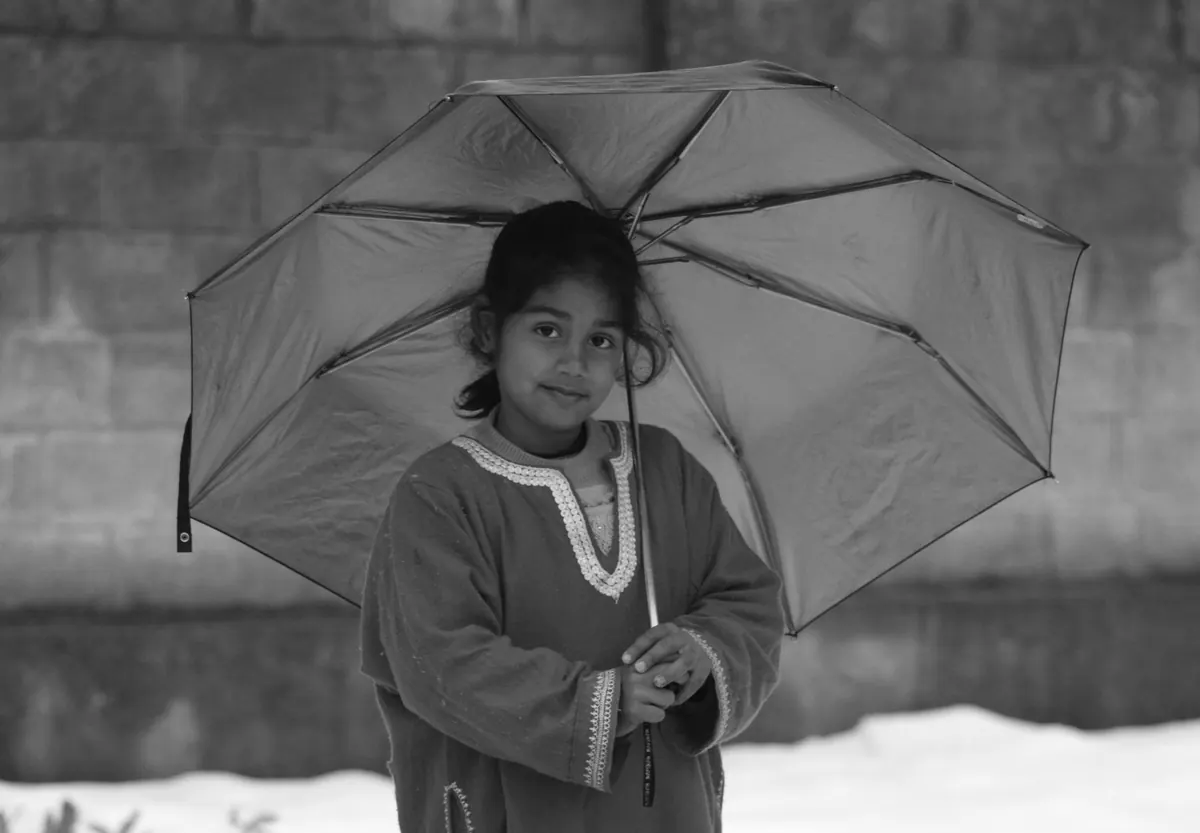
Somewhere between three and six years old, a child decides that holding an umbrella is a serious job. The walk to the car becomes an expedition, every puddle is a landmark, and the umbrella is no longer weather gear but equipment. Choose the first one well and rainy days turn into something your child looks forward to. Choose badly and you end up carrying a crooked canopy while they trail behind with their hands in their pockets.
Here is what actually matters, roughly in the order it matters.
Start With Size, Not Style
Most parents shop by colour. It is far more useful to shop by length first, because an umbrella that is too long drags along the pavement and one that is too short leaves shoulders soaked.
Two checks do most of the work. First, have your child hold the closed umbrella at their side, arm relaxed: the tip should clear the ground by a few centimetres, not scrape it. Second, open the canopy above them. The rim should sit around shoulder height, so their head and shoulders are comfortably inside it, not perched under a canopy that floats far above them.
For most four- to six-year-olds, a canopy somewhere in the region of 65 to 75 centimetres across is manageable. Wider canopies look protective but catch the wind, and a gust that tips an adult is enough to pull a small child sideways.
- Too long: the tip catches on steps and the child ends up dragging it.
- Too short: rain runs off the rim and straight down their back.
- Too wide: hard to control in wind, and awkward to steer through doorways.
Safety Features Worth Checking Before You Pay
Children's umbrellas are not complicated objects, but the cheap ones cut corners exactly where small hands are most vulnerable. Spend two minutes examining one in the shop or reading the details carefully online.
Look at the edges and the top
Run a finger along the canopy edge, where the ribs end. Those tips should be rounded or capped in soft plastic, not bare metal. The spike at the very top of the umbrella should be blunt as well; some children's models use a soft dome instead. A push-button lock that holds the canopy open is safer than a sliding ring that snaps shut unexpectedly.
Check the opening mechanism for pinch points
Open and close the umbrella yourself several times and watch where the metal joints move. On a well-made child's umbrella, fingers cannot reach into the folding arms while they are moving. On a flimsy one, they can. If you can pinch your own skin in the mechanism with normal use, a five-year-old will manage it too.
Think about being seen
Dark mornings and grey afternoons are when umbrellas matter most, which is exactly when a dark navy canopy disappears against wet tarmac. Bright colours, a patterned print, or a strip of reflective trim along the edge all help drivers and cyclists spot your child at a crossing.
Skip neck cords and long loops. A simple wrist strap is safer, because it keeps the umbrella attached without creating anything that can tighten around a neck. If your child has coordination or sensory differences that make carrying an umbrella tricky, their teacher or an occupational therapist can suggest alternatives worth trying.
Automatic or Manual?
Automatic umbrellas open with one press, which is genuinely useful for a child who struggles to push a runner up a stiff shaft. The trade-off is that the canopy springs open with real force. Teach your child to point the umbrella away from their face and hold the handle firmly before pressing the button, and practise it together a few times.
Manual umbrellas are slower but gentler, and many children's versions are designed so small hands can push the runner with two thumbs. Either works. What matters is that your child can open and close it alone without help, because an umbrella they cannot manage becomes one you carry.
Let Them Pick the Design
This is the part that decides whether the umbrella ever leaves the house. A plain umbrella in a "sensible" colour is the one that gets left in the porch. A dinosaur, a rocket, a watermelon slice, or a print of their favourite animal is the one they will insist on taking even when it is barely drizzling.
So give them a real choice, but a bounded one. Pick two or three options that pass your size and safety checks, then let your child decide between them. They get ownership; you get a safe umbrella. Children are also far more likely to look after something they chose themselves.
Half the value of a first umbrella is not staying dry. It is the small pride of being the person who brought it.
Practise Before It Rains
A dry afternoon in the garden is the best place to learn. Nothing about an umbrella is obvious the first time: the canopy blocks your view, the shaft swings, and opening it indoors is a recipe for a bumped nose or a knocked-over lamp.
- Show them how to hold the handle with a firm grip, thumb wrapped around the shaft.
- Open it outside, standing away from anyone else, with the canopy pointed up and away.
- Walk a few steps together and talk about their feet, not the umbrella — the canopy stays steady when they stop watching it.
- Practise tilting the canopy slightly into the wind rather than fighting it upright.
- Finish by shaking the water off, closing it slowly, and putting it in its spot by the door.
On genuinely windy days, be honest: leave the umbrella at home. A lightweight child's umbrella will invert, and wrestling with it is miserable. A hooded coat is the better call, and it saves the umbrella for the hundreds of ordinary drizzly days ahead.
Habits That Keep an Umbrella Alive
Most kids' umbrellas die the same death: left closed and wet in a bag until the fabric smells musty and the ribs rust at the joints. Two habits prevent it. Dry the umbrella open, upside down, for an hour or two after use, and hang it by the handle rather than stuffing it back in a sleeve. Once a term, check the small screws and the tip of each rib and tighten anything loose with a screwdriver.
Make It Easy to Grab and Go
Set up a small rainy-day corner by the door: a hook or basket for the umbrella, a place for wellies, and a cloth for wet handles. Keep a spare child's umbrella in the car if you have one, because the day it is needed is never the day it was packed.
Then, on the next wet morning, hand it over and let them carry it themselves. They will walk slower, hold it at odd angles, and probably get a wet shoulder anyway. That is fine. The umbrella is theirs, the rain is not an emergency, and the walk to school just became the best part of the day.
Photo: Tantray Junaid / Pexels