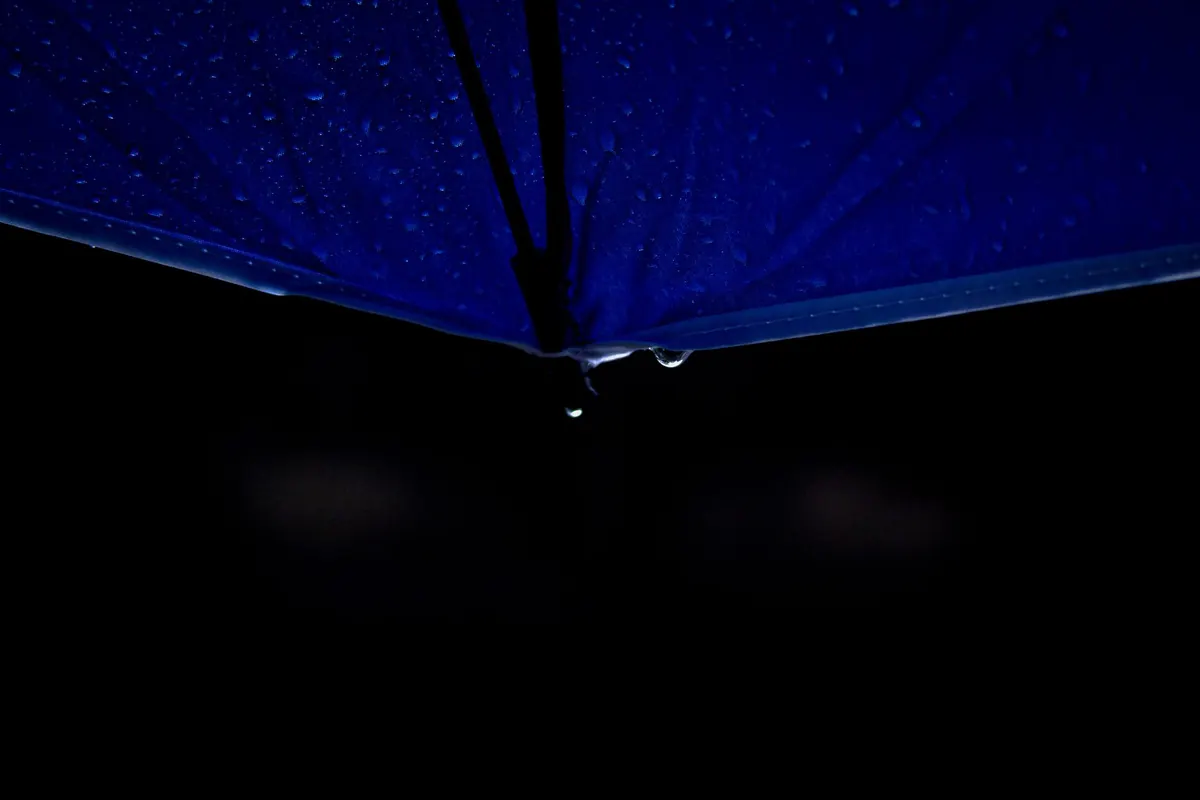
Every golfer has owned one: the umbrella that flipped inside out on the eleventh hole, ribs bent like a bad paperclip, while the rain came in sideways. The difference between that umbrella and one you can trust for years comes down to three things — canopy shape, venting, and the build of the shaft and ribs. None of them show up clearly in a product photo, which is why so many golfers end up buying on colour and price and re-buying two seasons later.
How Wind Actually Loads an Umbrella
Wind doesn't simply push a canopy sideways. It gets underneath, builds pressure, and lifts — which is why a big, deep dome behaves like a parachute. The canopy is the sail, the shaft is the lever, and your wrist is the pivot.
So the goal isn't the strongest possible umbrella. It's one that manages air pressure while still keeping you dry from the shoulders down: letting some air through, trapping less of it, and using parts that bend and recover rather than bend and stay bent.
It helps to think about the two failure moments separately. The first is the lift, when a gust gets under the canopy and tries to pull the whole thing out of your hand. The second is the inversion, when the canopy turns inside out and the ribs are forced past their limit. A good wind umbrella addresses both: vents reduce lift, and flexible ribs survive inversion.
Canopy Shape: Flatter Beats Deeper
A golf umbrella is measured across the open canopy. Sixty-two inches is the traditional single-player size; sixty-eight gives two people room or covers a bag on a cart. Here's the trade-off most buyers miss: every extra inch is extra sail area. On exposed links or coastal courses, a 58- to 62-inch canopy you can hold steady beats a 68-inch one that drags you off balance.
Shape matters as much as size. A shallow, gently arched canopy sheds wind over the top and sides. A deep bowl — the generous bubble shape that looks good in the shop — catches air underneath and holds it. Look at the profile from the side: if the dome is tall relative to its width, expect trouble when the wind picks up.
There's a practical test you can do without any equipment. Hold the open umbrella at arm's length and imagine a gust arriving from the side. The flatter canopy presents a shallow angle and lets air slide past; the deep one presents a scoop. That difference is worth more than any "windproof" sticker on the packaging.
Check the edges
Reinforced rib tips and a stitched hem keep the canopy from shredding where it flexes most. Eight panels is a common, sensible choice; more panels add seams and weight without much gain in wind resistance. Where the canopy meets the ribs — especially at the tips and the hub — is where cheap construction shows itself first, so run a thumb along those points before you buy.
Venting: The Pressure Valve That Saves the Frame
Venting is the most useful feature on a windy-weather umbrella, and it's easy to spot once you know what you're looking at.
- Double canopy. Two layers with a gap between them, so air escapes sideways instead of lifting the whole umbrella.
- Mesh crown vents. Mesh panels near the top let pressure out while keeping rain off. Look for generous, well-stitched mesh rather than a decorative slot.
- Single skin with ventilation windows. Usually lighter and cheaper, fine in moderate gusts, less effective when the wind really gets up.
Venting doesn't make an umbrella immune to wind; nothing does. It reduces how hard the wind pulls on your arm and gives the frame a chance to flex back rather than invert. A vented umbrella that flips once and recovers is worth more than a rigid one that flips once and dies.
You can feel the difference in the hand. A well-vented canopy rides a gust with a soft shudder, while an unvented one transmits a sharp, sudden tug — the kind that pulls your shoulder forward and, on a gusty day, sends your scorecard into a puddle.
Shaft and Ribs: Where Cheap Umbrellas Fail
Ribs take the first hit, the shaft takes the leverage, and the hub holds it together.
Fiberglass is the standard choice for wind-resistant golf umbrellas because it flexes and springs back. Steel feels solid, but a bent steel rib usually stays bent. Aluminum sits between the two: light and springy, prone to denting. Carbon fiber is light and stiff and generally costs more, though it isn't magic.
For the shaft, look for a thick wall rather than a thin tube. Some designs use a non-round profile, which adds stiffness and reduces the twisting motion that tends to come just before a flip. Metal ferrules and a firmly anchored hub matter too, since that's where leverage concentrates. The runner and spring catch are common failure points — a smooth, firm action as the umbrella opens tells you more than any label.
A useful benchmark: on a solid 62-inch wind umbrella, the ribs should feel springy but not floppy, and they should return to shape immediately when you flex one gently by hand. If a rib stays slightly curved after you release it, that's the sign of a material that will eventually give up.
Fabric, Grip, and the Details You'll Notice
Canopy fabric should be a tight-weave nylon or polyester, often sold by thread count such as 190T. Tight weaves hold their shape and shed water; heavier fabric lasts longer but weighs more. A water-repellent coating helps, and it does wear over time.
The grip is where you'll feel quality on the course. A rubberised or foam handle with a non-slip texture keeps the umbrella steady when your glove hand is wet, and a slightly longer grip gives you room to adjust your hold as the wind shifts. Look for a wrist strap you'd actually trust in a gust, and check that the tip is sturdy enough to plant in the turf while you mark a card or replace a glove.
Weight deserves a mention too. Light umbrellas are easier to hold steady, but very light ones often mean thin ribs and a thin shaft. Most wind-ready 62-inch models land in a middle range that balances both — heavy enough to feel planted, light enough to carry for eighteen holes.
Test It Before You Buy
If you can handle the umbrella in a shop, five minutes of checking will tell you more than a spec sheet. Work through this in order:
- Open and close it five times. The action should be smooth and firm, with no grinding or wobble at the runner.
- Press down gently on the open canopy from above. A good frame bows slightly and springs back; a poor one creaks at the hub.
- Flex one rib and let go. It should snap back straight, not sag.
- Hold the shaft near the base and twist. Excessive movement is a warning sign.
- Feel the grip with a wet glove or damp hand if you can, and check the wrist strap's stitching.
- Read the warranty. A maker who backs the frame for a couple of years is usually confident in the ribs.
Matching the Umbrella to Your Course and Conditions
There's no single best umbrella, only the best one for where you play.
- Exposed links and coastal courses. Prioritise venting, a flat canopy, and springy fiberglass ribs. Lean toward 58 to 62 inches.
- Parkland and sheltered courses. A single-skin umbrella is fine and will be lighter to carry.
- Cart golf. A 68-inch canopy covers two people and the bag, and the cart holder takes some of the strain off your wrist.
- Walking with a carry bag. Weight and folded length matter as much as wind resistance; check it fits your bag's umbrella sleeve.
- Year-round play in wet climates. Spend more on fabric and frame quality — you'll use it often enough to justify it.
Buy for the worst day you realistically expect, not the average one. An umbrella chosen for a breezy afternoon will fold the first time a squall rolls across the fairway.
An umbrella that flips and recovers has done its job. An umbrella that flips and stays flipped has told you everything about its ribs.
Get the canopy shape right, insist on real venting, and pay attention to the ribs, shaft, and hub. Do those three things and you'll stop buying umbrellas — and start carrying one.
Photo: lpegasu / Pixabay