There are two umbrellas in most homes. One is folded small enough to disappear into a bag and has been with you for years. The other stands by the front door, long as a walking stick, and only leaves the house when the forecast looks genuinely grim. Neither is the wrong choice. The trick is knowing which one suits the way you actually move through a rainy day, because the best umbrella is never the most impressive one on the shelf — it is the one that is in your hand when the sky opens.
Here is how the two types differ where it counts, and how to decide which belongs in your life.
Portability: the umbrella you have beats the umbrella you own
A folding umbrella typically packs down to somewhere between 20 and 30 centimetres when closed and weighs roughly 250 to 400 grams. That is small enough for a laptop bag's side pocket, a jacket with a decent inner pocket, or the bottom of a tote. It survives being forgotten, which is the whole point. You do not have to plan for rain; you just have it.
A full-size umbrella is a commitment. Closed, it is usually 80 to 100 centimetres long, and it wants a hand, a hook, or a dedicated spot in the car. You do not carry it casually — you decide to bring it. In exchange, you get a canopy that opens in one motion and covers far more of you.
One practical test before you buy anything: take the bag you carry most days and check whether the folded umbrella fits alongside your water bottle, charger and keys. If it only fits when the bag is half empty, it will stay home on the days you need it most.
Coverage: what the canopy actually protects
Open, a compact umbrella usually spans around 95 to 115 centimetres across. A full-size model runs closer to 120 to 155 centimetres, and a golf or storm umbrella goes wider still. Numbers on a spec sheet are abstract, so think in people instead.
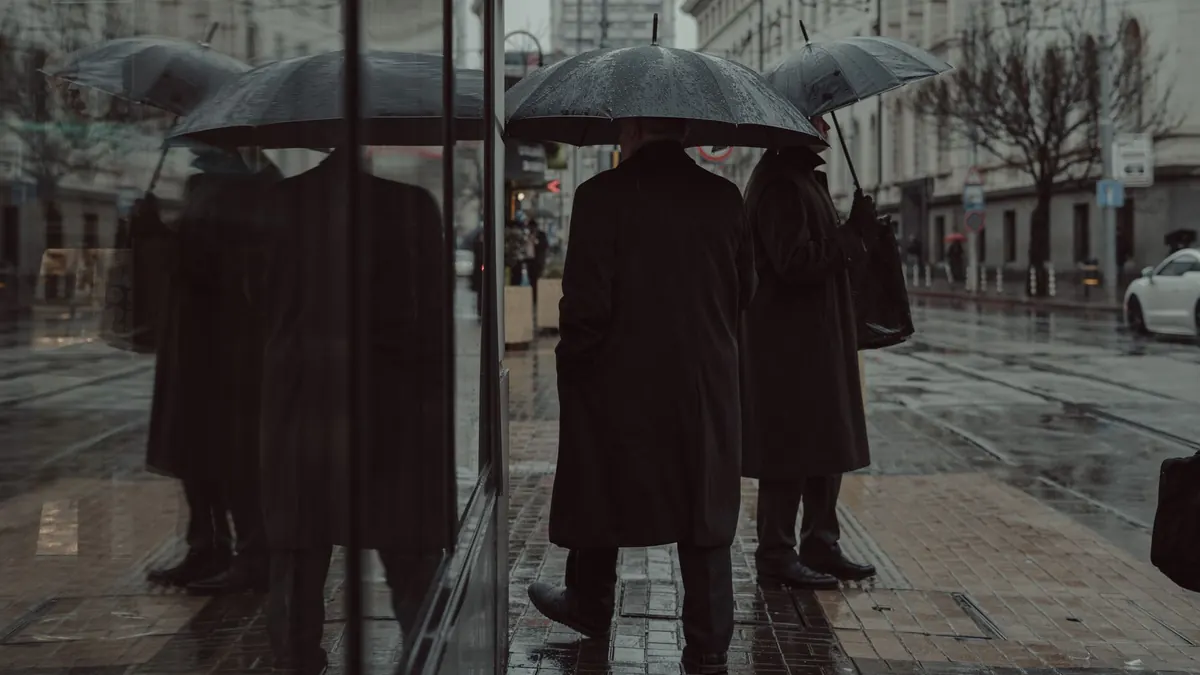
A compact canopy covers one person well, one person plus a small backpack reasonably, and two people badly. You will spend the walk tilting it into the wind and feeling drips on your shoulder. A full-size canopy covers one person generously, including a briefcase or shoulder bag, and two people at a slow, cooperative pace — someone will still get a wet arm, but nobody gets soaked.
Shape matters as much as width
A shallow, almost flat canopy sheds wind better but gives less headroom, so rain blows in around your face. A deeper dome keeps your head and shoulders dry but catches more gust. Neither is universally better; a flat profile suits city walking between buildings, while a domed canopy suits open ground and long walks.
Durability: count the moving parts
Umbrellas rarely fail in the fabric. They fail at the joints. A compact umbrella has two or three telescoping shaft sections and a set of folding ribs, which means more hinges, more rivets and more places for something to bend or seize. A full-size umbrella, especially a one-piece shaft model, has far fewer components and therefore fewer failure points.
This is why a modestly built full-size umbrella often outlives a modestly built compact one. Shaft and rib material matters too:
- Fibreglass ribs flex under pressure and spring back. Heavier than aluminium, but the best choice for wind.
- Aluminium ribs and shafts are light but bend permanently once they go past their limit. Once kinked, they never sit right again.
- Steel is strong and cheap, and rusts if you store the umbrella wet.
- Fabric is usually described by thread count — 190T is common and fine; 210T pongee feels denser and tends to bead water longer.
Wind, frames and automatic mechanisms
Automatic open-and-close buttons are convenient, especially when you are stepping out of a car. They also add a spring, a cable or a runner into the mechanism, and that assembly is one of the most common reasons an umbrella ends up in the bin. Manual umbrellas are lighter, cheaper to repair and generally last longer.
If you walk in exposed places, look for a vented canopy — the double layer with a gap that lets wind pass through instead of turning the umbrella inside out. Be sceptical of dramatic wind ratings printed on packaging. A useful check is simpler: hold the umbrella by the handle, push the canopy against a wall, and see how much the ribs flex and whether they return straight.
Which one fits your day
Most people do not need a verdict between the two categories. They need the right umbrella for the specific route they walk. A quick match:
- Public transport and city commuting: compact, because it lives in your bag and you never check the sky before leaving.
- School run, dog walks, long open walks: full-size, for the coverage and the steadier frame in wind.
- Flights and travel: compact, always. A full-size umbrella is awkward luggage and easy to leave behind.
- Keeping one in the car: full-size. It does not need to fold, and it dries faster hanging in the boot.
- Events, weddings, outdoor work: a full-size or golf umbrella in a dark colour that can be lent to a guest without drama.
- Two people sharing: full-size, no question. Compacts make generous people wet.
Small habits that make either umbrella last
Dry an umbrella fully open before you store it. Folded wet fabric grows a musty smell and rusts the ribs, which is how most umbrellas quietly die. Never leave one in a hot car for weeks; heat and trapped moisture are hard on both fabric and coatings. If the runner sticks, ease it rather than forcing it, and a light wipe of the shaft with a silicone or dry lubricant helps. When you refold, follow the original creases so the canopy closes without straining the ribs.
So which one do you need?
If you want one umbrella and only one, buy a compact with fibreglass ribs and a manual opening. It will not cover you like a golf umbrella, but it will be with you every day, and that is what stops you getting wet.
If you walk long distances in the open, share with a child or a bag, or you are tired of fighting with a small canopy in the wind, buy a full-size. Keep it by the door where you will see it.
And if you have space for both, that is not indecision. It is a sensible split: a compact in the bag for the surprise shower, a full-size by the door for the days you know what is coming.
Photo: MabelAmber / Pixabay